- Jellyfish are made up of 90% water, that adaptation helps them float in the water.
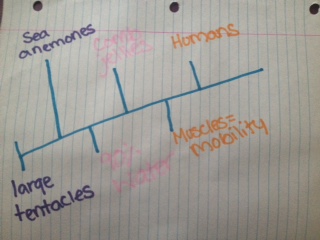
- Jellyfish have large tentacles to help them put food in their mouth.
- Their muscles help them with mobility.
- Jellyfish are from the Eukarya/animalia kingdom. This means they are MULTI-CELLULAR,HETEROTROPHS and they DO NOT have CELl WALLS
- abiotic factors are sand,shells, and the pollution in the ocean
- biotic factors are humans, jellyfish predators, and seaweeed.
- As we all know Humans affect the ocean. Pollution can smother marine life. Toxins,debris,oil,and fertilizer can cause a lot of harm to jellyfish. Their tentacles could stick together from oil and the toxins can make it hard for them to breathe.
- Parasitism- In this relationship, there is a parasite and a host. The parasite benefits from living in thehost. The host is harmed killed by the parasite. For example: ticks or tapeworms in a dog or on a dog
- Mutualism- between two different species of organisms it benefits both organisms. Neither organisms will be able to survive on its own.examples: An alga and a fungus form a lichen
- Commensalism- two organisms in which one partner benefits in which one benefits while the other does not receive any benefits or harm . For example: A whale has alage attached to it that fish eat off . The whale is not benefited of harmed.
- Innate behavior-migtation:when a species moves over long distances. Trial and error: when animals learn behaviors by attempt
just keep swimming